Hexatonic
Fill the board with the right numbers and colors, inspired by Tectonic (also known as Suguru). The twist: you start almost blind and earn clues one guess at a time.

The Rules
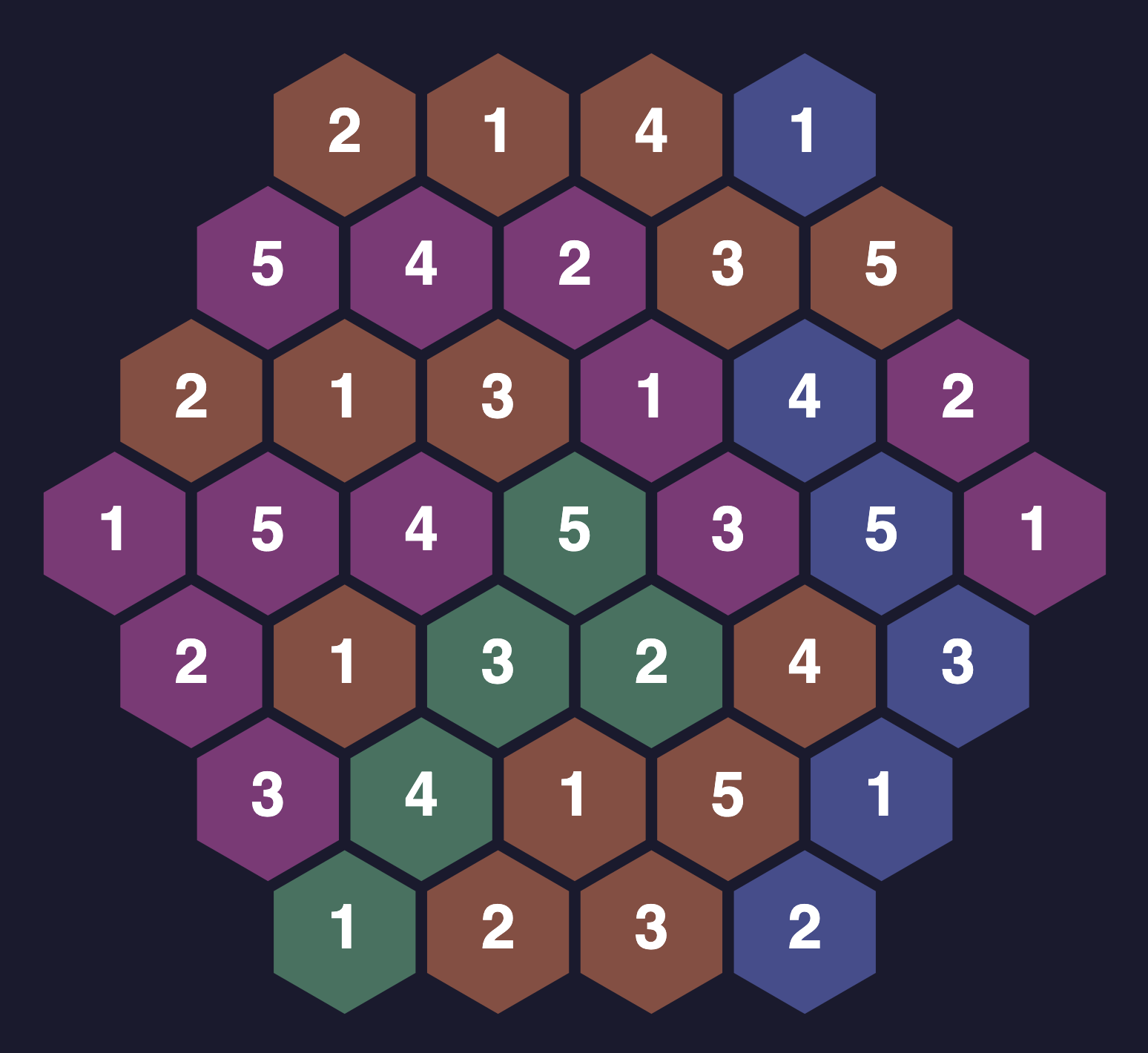
The board is divided into groups of tiles, each group distinguished by a color. Two rules govern the solution:
- Groups: a group of size n contains the digits 1 through n, each exactly once. Groups can have size 1, 2, 3, 4 or 5.
- Neighbors: no two tiles that touch each other may share the same digit — even if they belong to different groups.
What Makes It Different
At the start, a lot of tiles are grey — their color (and therefore their group) is unknown. You have to figure out both the digit and the color of each tile.
After every correct guess the game adds just enough new clues to keep the puzzle solvable. You're never left guessing blindly.
If you get stuck, the ? button can walk you through the reasoning behind a tile — without spoiling the rest of the board.
Example
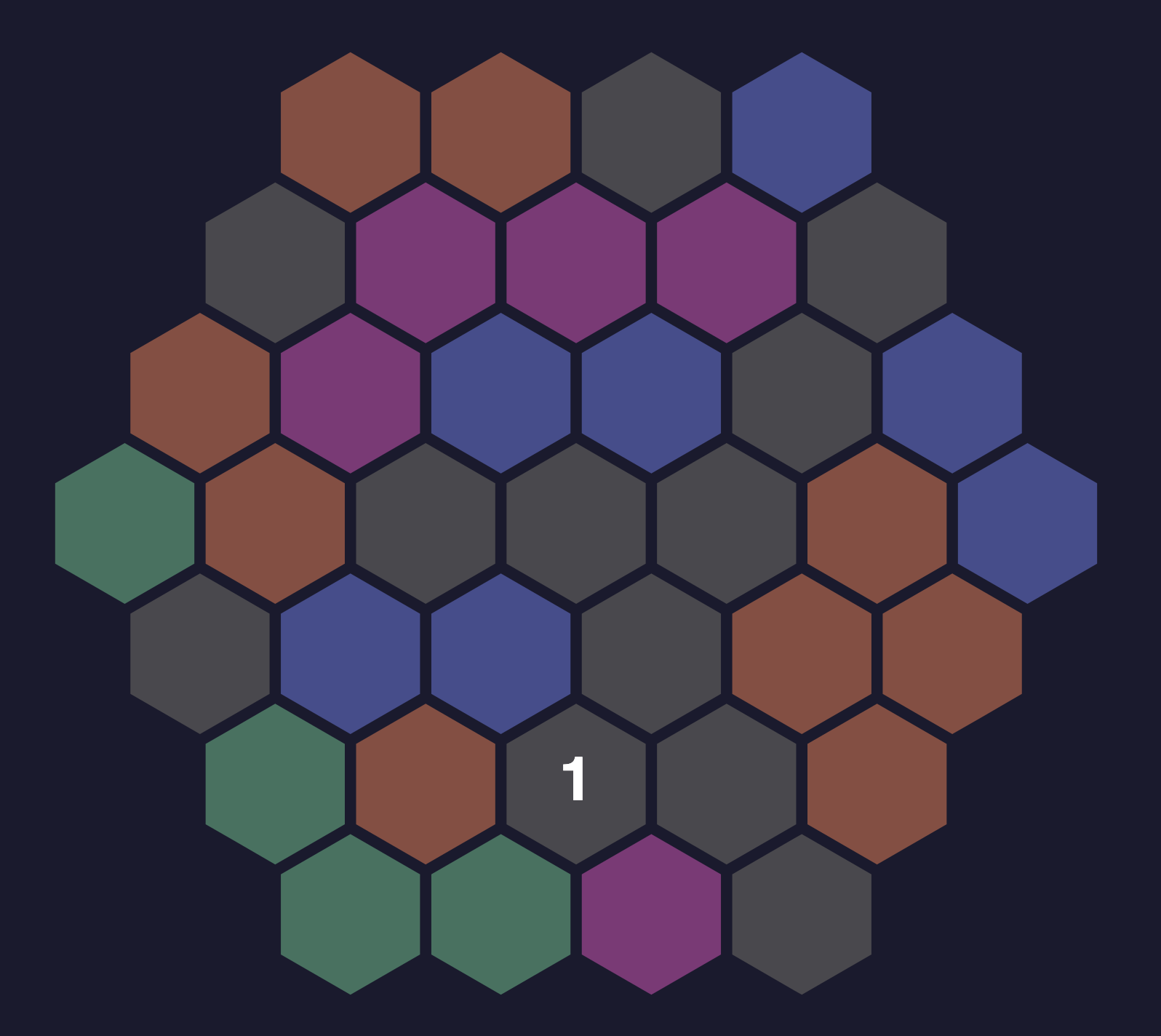
In the example above, only one digit has been revealed so far: a 1 near the bottom. The tile immediately to its left has a color. If no neighbor of that tile shares its color, it is the only tile in its group. Then it should have the digit 1. But that violates the rule that no two touching tiles can have the same digit. Therefore, the tile with the digit 1 must have that same color.
Two-Player Mode
Each player gets their own copy of the board. After a correct guess, the guesser picks a set of clues to hand to their opponent. All clues come from your partner's choices, never added automatically. Players alternate turns, so there's a small strategic element in what you reveal.